
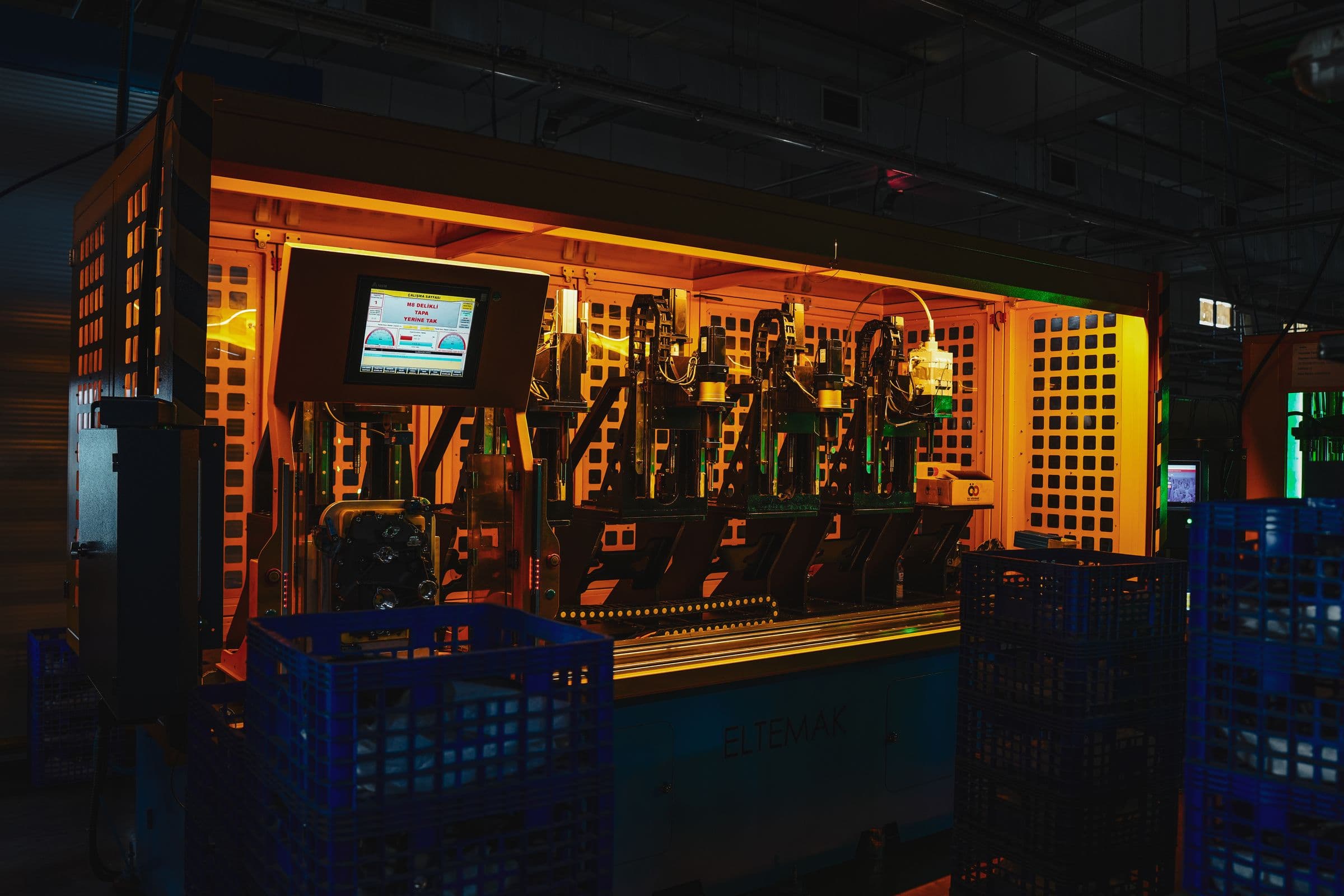
Industry solutions · Industrial IoT
Connect Machines. Understand Operations. Improve Performance.
We engineer the complete path from sensor to decision — PLC and sensor integration, edge gateways, secure messaging, cloud analytics and the dashboards your operations teams actually use.
- Modbus
- OPC UA
- MQTT
- Edge AI
- OTA
- Predictive maintenance
Your machines already produce the data. Most of it is never used.
Industrial equipment is full of signals — PLC registers, drive currents, temperatures, vibration, cycle counts and fault codes. In most plants these signals stay locked inside individual machines, proprietary HMIs or vendor portals, and operations teams are left reconciling paper logs and end-of-shift reports.
Connecting a factory is not a single product purchase. It requires hardware decisions, industrial protocols, reliable edge software, secure networking, a data platform that handles high-frequency time series, and analytics that operators trust. Gaps between those layers are where most IIoT initiatives stall.
Arrow Digits covers the full spectrum, from embedded firmware and gateway software to cloud platforms and AI models. We design each layer to work with your existing machines and control systems, and we favor open protocols and portable architecture so you are not locked into a single vendor's ecosystem.
From a register on a PLC to a decision on a dashboard — engineered as one system.
Brownfield first
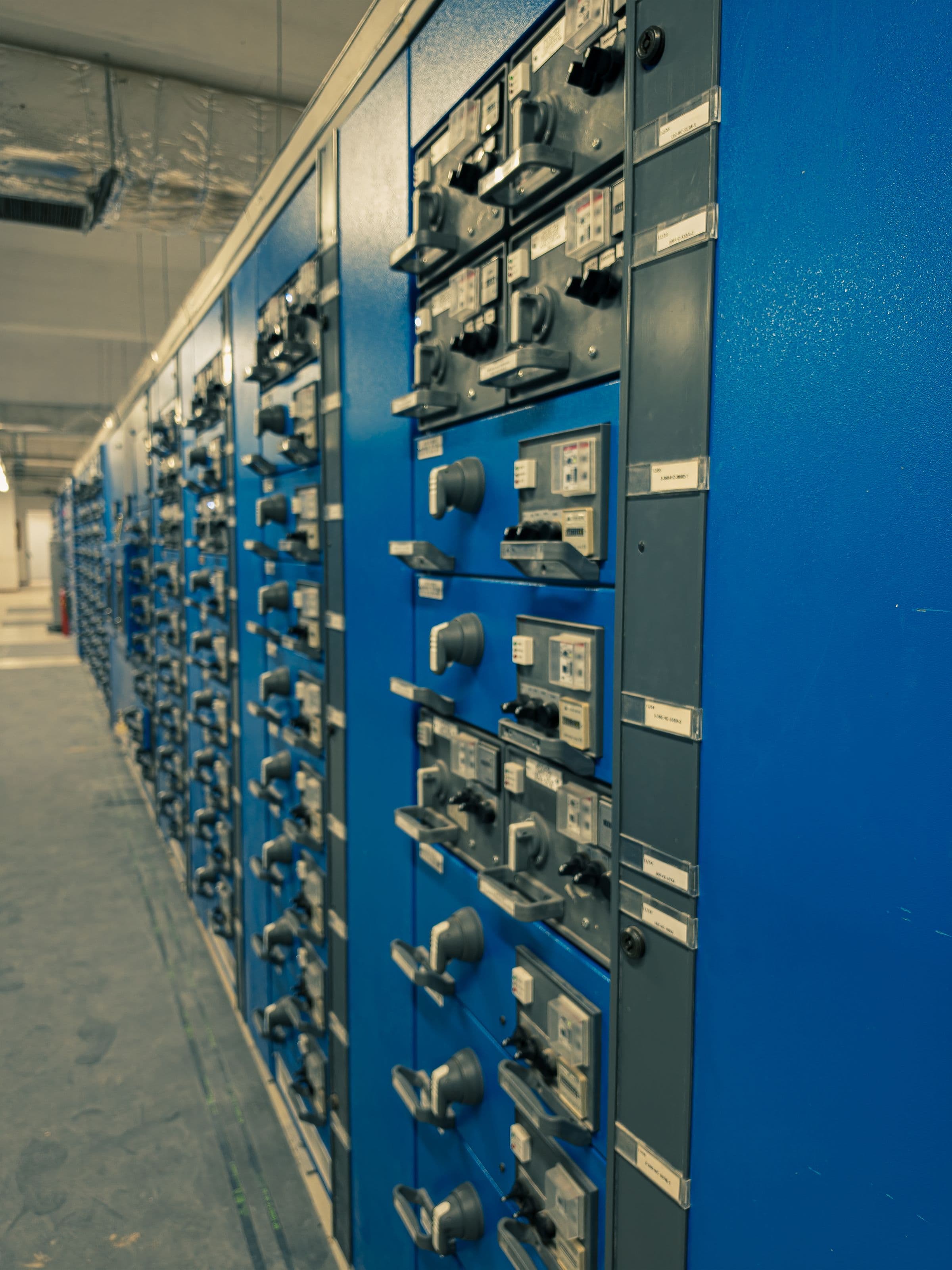
We connect the machines you have today, including legacy equipment, through PLC integration, retrofit sensors and protocol bridges.
Edge where it matters
Latency-sensitive logic, filtering and inference run at the edge, so operations keep working when connectivity does not.
Open architecture
MQTT, OPC UA and portable deployment options reduce vendor dependency and keep your data accessible.
Security by default
Device identity, encrypted transport, network segmentation and least-privilege access are part of the design, not an afterthought.
Every layer of the industrial data stack.
We build complete IIoT systems or strengthen the layer you are missing — whether that is reliable data acquisition, device fleet management or analytics that turn telemetry into action.
Real-Time Machine Telemetry
High-frequency data acquisition from machines and sensors with consistent timestamps, units and asset context.
- Cycle, state, fault and alarm capture
- Asset hierarchy and tag modeling
- Time-series storage tuned for high write rates
Industrial Sensors & PLC Integration
Integration with PLCs, drives and instruments over industrial protocols, plus retrofit sensors for equipment without digital interfaces.
- Modbus RTU/TCP and OPC UA connectivity
- Vibration, temperature, current and pressure sensing
- Retrofit kits for legacy machines
Edge Computing
Gateway and edge software that filters, aggregates, buffers and analyzes data close to the machine.
- Store-and-forward during network outages
- Local rules and edge AI inference
- Containerized edge workloads on Linux gateways
Device Management
Secure provisioning, configuration and lifecycle management for fleets of sensors and gateways.
- Zero-touch provisioning and device identity
- Over-the-air firmware and software updates
- Health monitoring and remote diagnostics
Predictive Maintenance
Models that learn normal machine behavior and estimate when components are trending toward failure.
- Condition indicators from vibration and current
- Degradation trend and maintenance horizon estimation
- Integration with maintenance work-order systems
Anomaly Detection
Statistical and machine-learning detection of unusual behavior, tuned with operators to minimize alert fatigue.
- Baseline learning per asset and operating mode
- Explainable alerts with contributing signals
- Alert routing, acknowledgement and escalation
Industrial Dashboards
Operational views for operators, supervisors and managers — from live machine status to availability and downtime analysis.
- Live machine state and alarm boards
- Downtime reasons and availability analysis
- Role-based views from line to plant level
Hardware-to-Cloud Integration
Custom hardware and firmware, gateways and cloud services engineered as one coherent, secure system.
- ESP32 and microcontroller firmware
- Industrial gateway selection and integration
- Cloud, on-premise or hybrid deployment

Edge to cloud
Machine signals become maintenance decisions — before the breakdown.
- Edge inference
- Anomaly detected
- Work order raised
A layered path from sensor to decision.
Each layer has a clear responsibility and an open interface to the next, so the system can grow from a single production line to multiple sites without being rebuilt.
Applications
Dashboards, alerts & maintenance workflows
- Live machine boards
- Downtime analysis
- Alert routing
- Work-order integration
- Reports & exports
Platform
Data platform & analytics
- Time-series database
- Rules & event engine
- Anomaly detection
- Predictive models
- APIs
Transport
Secure messaging & device management
- MQTT broker
- TLS & device certificates
- Provisioning
- OTA updates
- Fleet health
Edge & field
Machines, PLCs, sensors & gateways
- PLCs & drives
- Modbus / OPC UA
- Retrofit sensors
- ESP32 nodes
- Edge gateways
Typical operational challenges we engineer for.
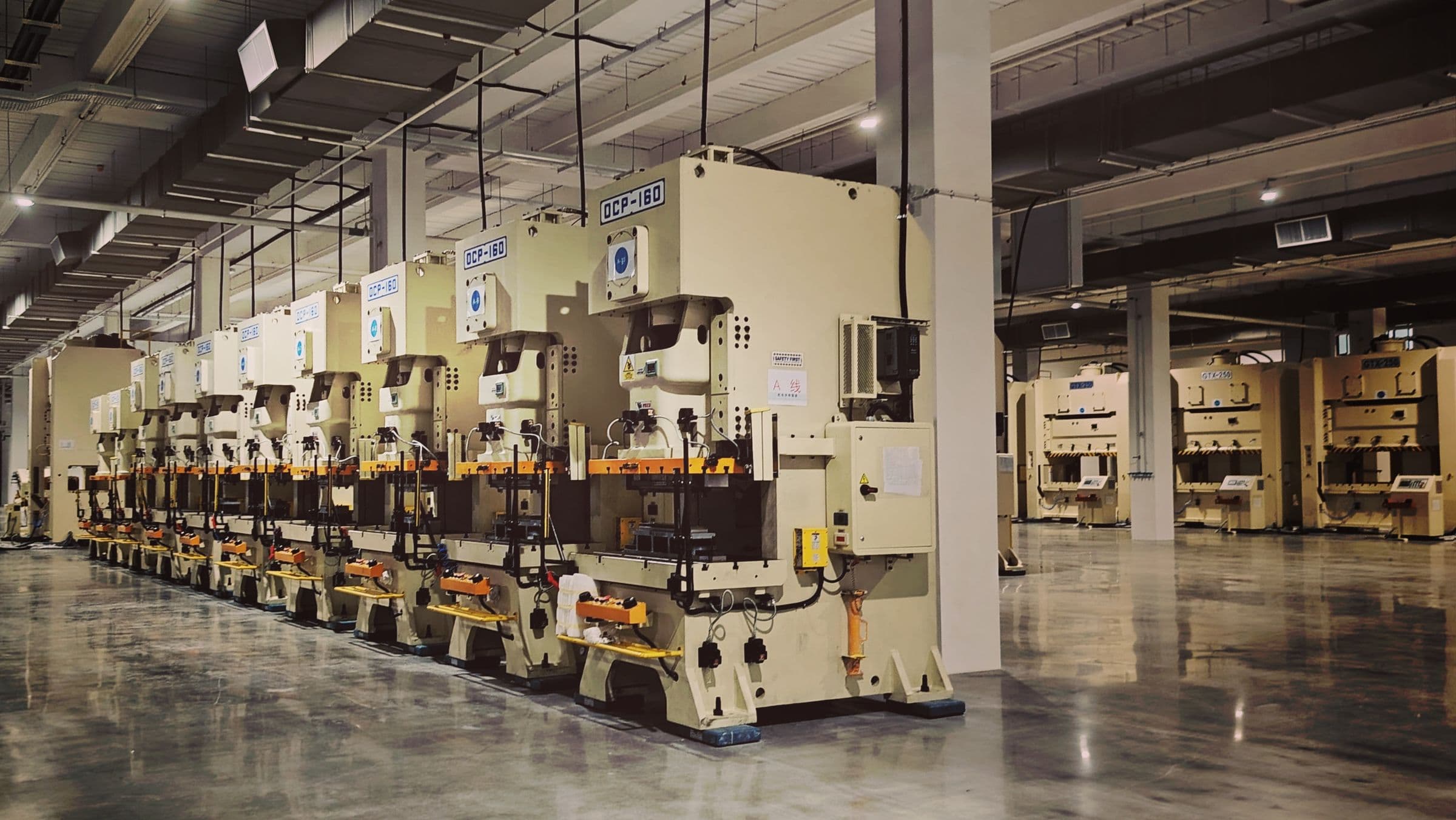
Mixed-vintage machine fleet
- Challenge
- A plant runs a mix of modern PLC-controlled machines and older equipment with no digital interface, making a consistent view of machine status impossible.
- Engineering approach
- PLC integration over Modbus and OPC UA for modern assets, retrofit current and vibration sensors for legacy machines, and a unified asset model so every machine reports state in the same way.
Unplanned downtime on critical assets
- Challenge
- Critical motors and spindles fail without warning, and maintenance relies on fixed schedules or operator intuition rather than equipment condition.
- Engineering approach
- Continuous vibration and current monitoring, edge-calculated condition indicators, and models that flag abnormal trends early enough for maintenance teams to plan an intervention.
Unreliable connectivity on the shop floor
- Challenge
- Wireless coverage is inconsistent and network outages cause gaps in production data, undermining trust in reports and dashboards.
- Engineering approach
- Edge gateways with store-and-forward buffering, local rules for time-critical alerts, and synchronization logic that backfills the cloud once connectivity returns.
From site survey to fleet-scale operation.
- 1
Site survey & asset inventory
We document machines, controllers, available signals, network conditions and the operational questions the data must answer.
- 2
Architecture & hardware selection
We select sensors, gateways and protocols, define the data model and security approach, and choose cloud, on-premise or hybrid deployment.
- 3
Proof on representative assets
A small set of machines is connected end-to-end to validate signal quality, edge behavior and dashboard usefulness with real operators.
- 4
Fleet rollout & device management
Provisioning, OTA updates and monitoring are put in place before scaling to more lines, machines and sites.
- 5
Analytics & continuous improvement
With reliable data flowing, we add anomaly detection, predictive maintenance and deeper operational analytics.
Relevant technology
- Field & protocols
- Modbus RTU/TCPOPC UAMQTTESP32Industrial sensors
- Edge
- Linux gatewaysDockerC++RustPythonEdge AI
- Data platform
- ClickHousePostgreSQLRedisFastAPINode.js
- Applications
- ReactNext.jsTypeScriptFlutterAlerting integrations
Frequently asked
Can you connect older machines that have no network interface?
Yes. For legacy equipment we use retrofit sensors — for example current transformers, vibration and temperature sensors — connected to microcontroller nodes or gateways. This lets older machines report run state and condition data alongside modern PLC-controlled assets.
Which industrial protocols do you work with?
We commonly integrate Modbus RTU and TCP, OPC UA and MQTT, and we assess vendor-specific interfaces during discovery. Our gateways normalize data from different protocols into a single asset and tag model before it reaches the data platform.
Does the data have to go to a public cloud?
No. We design for cloud, on-premise or hybrid deployment depending on your security, latency and regulatory requirements. Our open-architecture approach keeps the system portable, so the deployment model can change later without rebuilding the solution.
How do you approach security for connected devices?
Each device receives its own identity and credentials, communication is encrypted, devices sit in segmented networks, and access is role-based and logged. Firmware and software updates are signed and delivered through a controlled OTA process.
How much data do we need before predictive maintenance is possible?
It depends on the asset and the failure modes you care about. We usually start with condition monitoring and anomaly detection, which deliver value early, and introduce predictive models once enough representative operating and failure history has been collected.
Continue exploring
- Apparel ManufacturingSewing-floor IoT, cutting-room automation and manufacturing intelligence for garment producers.
- Mobile App DevelopmentOffline-first field and maintenance apps with hardware and real-time backend integration.
- Enterprise AI IntegrationPredictive analytics and computer vision integrated into existing operational systems.
Start a conversation
Let's connect your machines to decisions.
Share your equipment, controllers and the operational questions you need answered. We'll outline an architecture that fits your plant and a practical first step to prove it.