

Autonomous AI Agent Development
Move Beyond Chatbots. Build AI Systems That Take Action.
We engineer AI agents that read your systems, reason over your private knowledge and carry out real work — raising purchase orders, reconciling records, triaging tickets — inside permission boundaries you define, with every step recorded.
- Agentic workflows
- Multi-agent
- MCP
- Enterprise RAG
- Audit trails
A Chat Window Is Not an Operating Model.
Most enterprise AI pilots stop at a conversational interface. The model answers questions, a person copies the answer into another system, and the real workflow stays exactly as manual as before. The value is capped by the number of times someone remembers to ask.
Agents change the unit of work. Instead of producing text, an agent receives a goal, plans the steps, calls the tools your teams already use and returns a finished outcome — or stops and asks for approval when the stakes require it.
That only works in production when the engineering is right: scoped credentials, deterministic guardrails around probabilistic reasoning, evaluation suites that catch regressions, and audit trails that compliance teams can actually read. That is the part we focus on.
An agent is only as trustworthy as the permissions, evidence and oversight engineered around it.

Actions, not answers
Agents are designed around a measurable business task — a document processed, a case resolved, an exception routed — not around a prompt.
Grounded in your data
Retrieval runs over your private knowledge with the same access rules as the source systems, so agents never see what the requesting user could not.
Bounded autonomy
Each tool has an explicit scope. Reversible, low-risk steps run automatically; sensitive ones pause for a named human approver.
Observable by default
Every plan, tool call, input and output is traced, so behavior can be reviewed, replayed and improved.
Agent Systems Engineered for Real Operations.
From a single task agent to coordinated teams of specialists, each capability is built to run against live systems — not a demo sandbox.
Agentic Workflow Automation
Multi-step business processes executed end to end by agents that plan, act, verify and hand off.
- Goal decomposition and step planning
- Retries, fallbacks and compensation steps
- Event, schedule or API-triggered runs
Multi-Agent Orchestration
Specialist agents for research, retrieval, analysis and execution, coordinated by an orchestrator with shared state.
- Supervisor and pipeline topologies
- Shared memory with scoped context
- Cost and latency budgets per run
MCP & Secure Tool Integration
Model Context Protocol servers that expose your ERP, databases, file stores and APIs to agents through typed, permissioned tools.
- Typed tool schemas with validation
- Per-tool scopes and rate limits
- Secrets kept server-side, never in prompts
Enterprise RAG
Retrieval pipelines that combine vector and keyword search over documents, tickets, wikis and structured records.
- Chunking tuned to document structure
- Hybrid search with re-ranking
- Source citations on every answer
Private Knowledge Intelligence
An organization-wide knowledge layer that respects source permissions and can run fully inside your infrastructure.
- Access-aware indexing per user and role
- Incremental sync from source systems
- Self-hosted or private-cloud models
Human-in-the-Loop, Permissions & Audit
Approval checkpoints, role-based action limits and an immutable record of what every agent did and why.
- Approval queues with full context
- Permission-based actions by role
- Searchable audit trail and replay
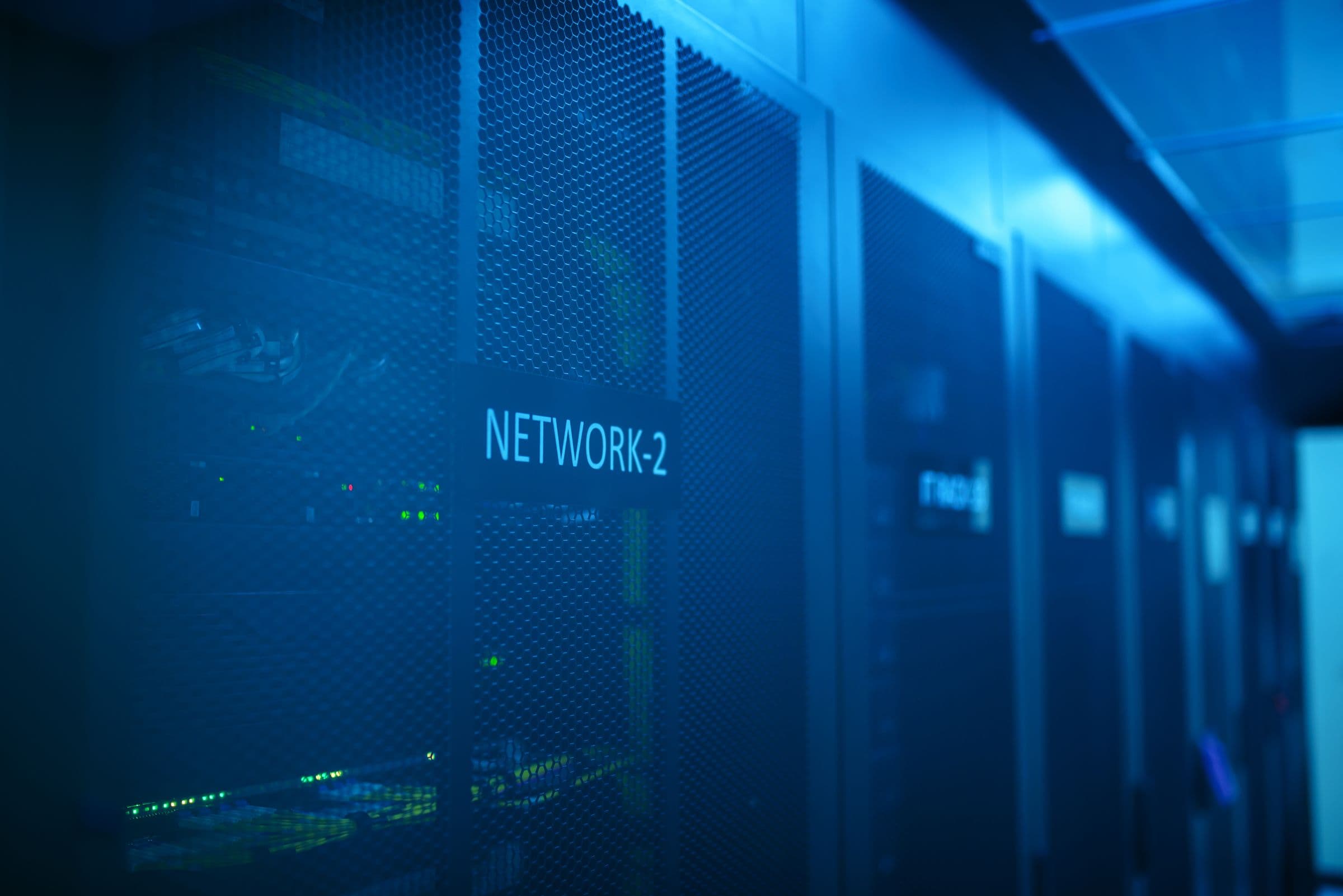
Private by design
Agents run inside your boundary — your cloud, your data center, your rules.
- Private models
- Scoped permissions
- Full audit trail
Four Layers Between a Goal and a Safe Action.
We separate reasoning from execution so autonomy can grow without losing control. Each layer can be tested, monitored and governed independently.
Reasoning
Orchestrator & specialist agents
- Goal planning
- Task delegation
- Model routing
- Evaluation hooks
- Cost budgets
Control
Permission gate & human approval
- Tool scopes
- Policy rules
- Approval queues
- Rate limits
- Kill switch
Execution
MCP tool layer
- ERP & CRM tools
- Database queries
- Document actions
- Internal APIs
- Notifications
Knowledge
Private knowledge & audit
- Vector + keyword index
- Access-aware retrieval
- Trace store
- Audit log
- Evaluation datasets
Representative Agent Engagements.

Procurement exception handling
- Challenge
- Purchase orders that fail three-way matching land in a shared inbox, where staff manually compare invoices, receipts and contracts before deciding what to do.
- Engineering approach
- A retrieval agent gathers the PO, goods receipt and contract terms; an analysis agent classifies the mismatch; an executor drafts the correction in the ERP and routes it to a buyer for one-click approval.

Engineering knowledge assistant with actions
- Challenge
- Technicians lose time searching manuals, past work orders and spec sheets, then re-keying findings into the maintenance system.
- Engineering approach
- An access-aware RAG layer answers with cited sources, and an agent creates or updates the work order through an MCP tool — limited to the technician's own permissions.

Customer operations triage
- Challenge
- High-volume support queues mix routine requests with urgent, account-specific issues, and routing depends on context buried across several systems.
- Engineering approach
- Agents enrich each ticket from CRM and order data, resolve routine cases through approved tools, and escalate the rest with a summarized case file and a suggested next action.
From First Workflow to Governed Agent Platform.
- 1
Workflow & risk mapping
We map the target process step by step, identify which actions are safe to automate, which need approval, and what data each step depends on.
- 2
Tooling & knowledge foundation
We build the MCP tools, credentials model and retrieval index first, because reliable agents depend on reliable access to systems and data.
- 3
Agent prototype with evaluation
A working agent runs against real (or realistic) cases, scored by an evaluation suite that measures task success, tool accuracy and policy compliance.
- 4
Controlled rollout
Agents start in shadow or approval-only mode, and autonomy is widened step by step as evidence from traces and reviews supports it.
- 5
Operate & extend
Monitoring, cost tracking and regression tests keep behavior stable as models, prompts and business rules change, and new workflows reuse the same platform.
Relevant technology
- Agents & models
- LLMs (hosted or self-hosted)Agentic workflowsTool callingMCP
- Knowledge
- RAGPostgreSQL + pgvectorHybrid searchRe-ranking
- Services
- PythonFastAPINode.jsRedis queues
- Operations
- DockerLinuxTracing & evaluationAudit storage
Frequently asked
How is an AI agent different from a chatbot?
A chatbot returns text for a person to act on. An agent is given a goal and the tools to achieve it: it plans steps, queries systems, takes actions such as creating records or sending notifications, checks the result and reports back. The engineering challenge shifts from conversation design to permissions, reliability and oversight.
How do you stop an agent from taking the wrong action?
Through layered controls rather than prompt instructions alone. Every tool has an explicit scope and validated inputs, a policy layer decides which actions require approval, sensitive steps pause for a named reviewer, and evaluation suites test behavior before each release. Agents can also run in shadow mode until their decisions are verified.
What is MCP and why do you use it?
The Model Context Protocol is an open standard for exposing tools and data to AI models. Building integrations as MCP servers gives each system a typed, permissioned interface that can be reused across agents and models, keeps credentials server-side and avoids locking your integrations to one AI vendor.
Can agents run on our own infrastructure with private data?
Yes. We design for cloud, private-cloud and on-premise deployment, including self-hosted open-weight models where data residency or confidentiality requires it. Retrieval respects the permissions of the source systems, so an agent acting for a user only sees what that user is allowed to see.
Where should we start?
With one workflow that is frequent, rule-heavy and painful today, and where the actions can be clearly scoped. We map it, build the tools and knowledge it needs, and run it under approval. That first workflow becomes the foundation — tools, index, audit and evaluation — for the next ones.
Continue exploring
- Enterprise AI IntegrationAdd document intelligence, vision and prediction to the systems you already run.
- AI & Automation OverviewHow agents, integration and automation fit together across an organization.
- Engineering ApproachThe four-stage method we use to take complex systems from discovery to production.

Start a conversation
Pick One Workflow. Let's Engineer the Agent Around It.
Bring a process your team handles manually today. We'll map where an agent can act, where it should ask, and what it needs to do the job safely.