

Engineering approach
From Complex Challenges to Production-Ready Systems.
A disciplined, transparent method that removes risk early, keeps your team close to the work, and ends with a system you can run, own and evolve.
- Discovery
- Architecture
- Prototyping
- Integration
- Deployment
- Knowledge transfer
How We Think About Engineering.
Six principles that shape every engagement, from a two-week discovery to a multi-year platform.
Problem before technology
We define the business outcome and constraints first; technology is selected to serve them, not the reverse.
Hardest risks first
The riskiest assumptions — data quality, integration limits, hardware behavior — are tested before the bulk of the build.
Modular by default
Systems are composed of well-bounded modules with clear contracts, so they can be extended, replaced or scaled independently.
Your team stays in the loop
Short iterations, regular working demos and shared tooling. No black-box months followed by a big reveal.
Documented and ownable
Architecture decisions, runbooks and code are documented so your team can operate and evolve the system.
Open architecture
Open standards and portable deployment options to reduce vendor dependency and protect your long-term flexibility.
What Happens at Each Stage.
- 01
Discover & Understand
Understand business processes, existing infrastructure, data, requirements, and bottlenecks.
Activities
- Stakeholder and operator interviews
- Process walk-throughs on the floor or in the workflow
- Inventory of systems, data sources, devices and integrations
- Constraint mapping: security, compliance, latency, budget
Outputs
- Process & system map
- Prioritized problem statement
- Success criteria agreed up front
- 02
Architect & Validate
Develop technical blueprints, select architecture, and build working prototypes.
Activities
- Solution architecture and technology selection
- Data model and integration contracts
- Risk spikes on the hardest unknowns first
- Working prototype against real data or hardware
Outputs
- Architecture blueprint
- Validated prototype
- Delivery plan with milestones
- 03
Engineer & Integrate
Develop modular systems, integrate AI, APIs, software, databases, and devices.
Activities
- Modular, test-covered development in short iterations
- AI, API, database and device integration
- Security reviews, permissions and audit logging
- Continuous demos with your team
Outputs
- Production-grade software
- Automated tests & CI/CD
- Integration documentation
- 04
Deploy & Evolve
Deploy, validate, transfer knowledge, and continuously scale.
Activities
- Staged rollout on your cloud, on-premise or hybrid
- Monitoring, alerting and performance baselines
- Hands-on knowledge transfer and runbooks
- Roadmap for the next iteration
Outputs
- Live, monitored system
- Runbooks & handover
- Evolution roadmap
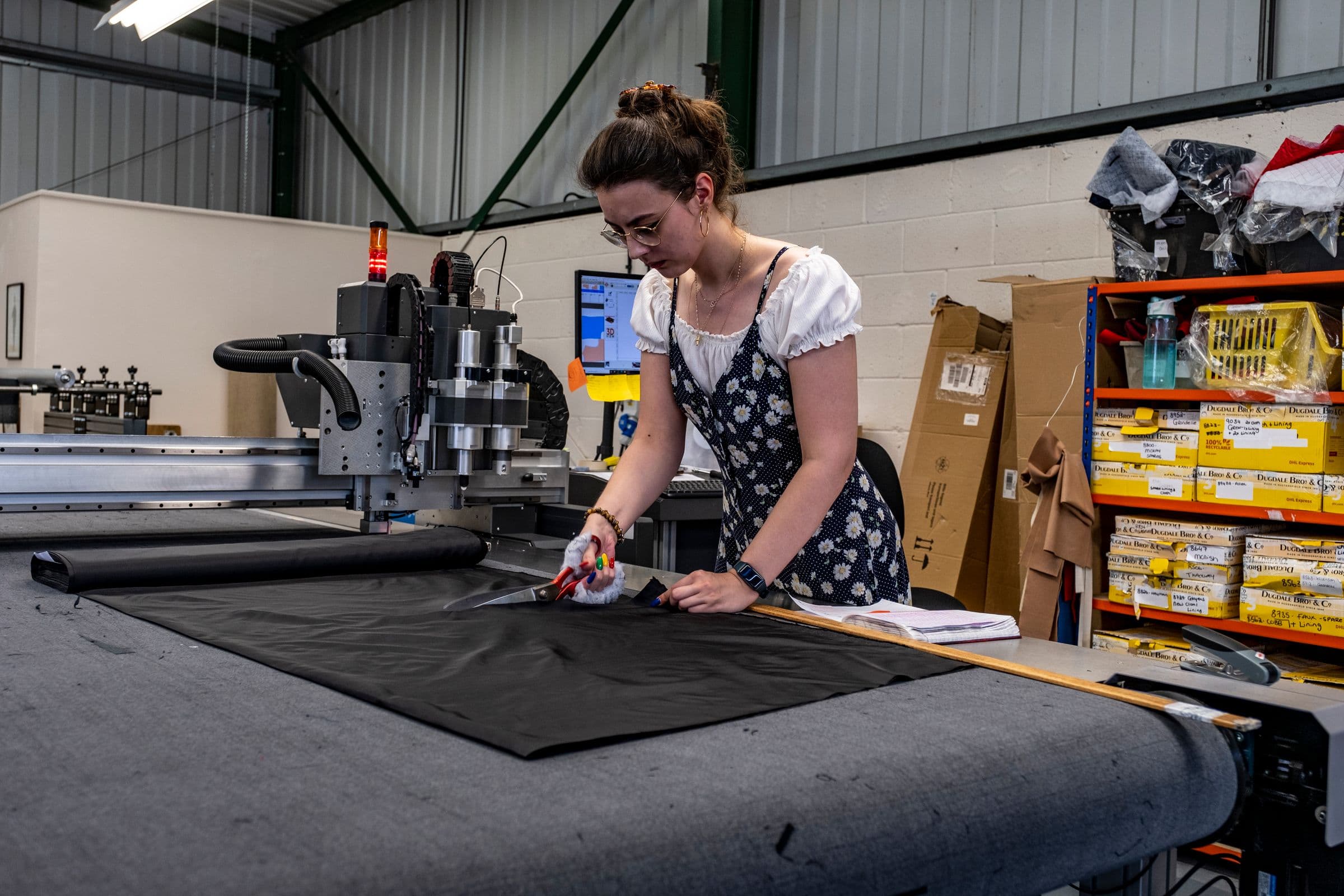
Validated on reality
Prototypes are proven against real machines, real files and real data — before anything scales.
- Real hardware
- Real data
- Measured
Ways to Work With Us.
Pick the model that matches your certainty and internal capacity. Engagements can move from one model to another as needs change.
Discovery & architecture sprint
A short, fixed-scope engagement to map the problem, validate feasibility and produce an architecture blueprint and delivery plan.
Best forComplex or uncertain initiatives that need clarity before committing budget.
End-to-end product build
We take a defined product from architecture through production deployment, with milestones and regular demos.
Best forNew SaaS products, AI platforms or operational systems with a clear owner.
Modernization program
Incremental replacement or enhancement of legacy systems, keeping operations running while capability is added module by module.
Best forBusiness-critical systems that cannot be switched off for a rewrite.
Embedded engineering team
Arrow Digits engineers working alongside your team on your roadmap, bringing architecture, AI or IoT depth where you need it.
Best forOrganizations with an in-house team that needs specialist capacity.
Production-Grade Is the Default.
Every system we deliver follows the same baseline of engineering practice — regardless of size.
- Peer code review on every change
- Automated tests and continuous integration
- Infrastructure as code and reproducible environments
- Security review of authentication, permissions and data flows
- Observability: logging, metrics and alerting from day one
- Architecture decision records
- Performance baselines for critical paths
- Runbooks and operational handover documentation
Frequently asked
How long does the discovery stage take?
It depends on scope, but discovery is deliberately short and focused — typically measured in weeks, not months. Its purpose is to reduce uncertainty enough to make a confident architecture and investment decision.
Do you work with fixed scope or time and materials?
Both, depending on the stage. Discovery and well-defined builds suit fixed scope. Evolving products and embedded teams usually suit time and materials with agreed milestones and transparent reporting.
Who owns the code and intellectual property?
Ownership terms are agreed in the contract before work begins. Our standard approach is that you own the system we build for you, delivered with the documentation needed to run and extend it.
Can you work with our in-house engineers?
Yes. We regularly share repositories, standards and ceremonies with client teams, and we plan knowledge transfer from the start so your engineers can take over or continue alongside us.
What happens after deployment?
We monitor the system through a stabilization period, hand over runbooks, and agree on next steps — ongoing support, a new iteration, or a clean handover to your team.

Start a conversation
Start With a Discovery Conversation.
Tell us what you're trying to change. We'll outline how we'd approach it, what we'd validate first, and what a sensible first milestone looks like.