
AI Integration & Legacy Modernization
Make Your Existing Software Intelligent Without Rebuilding Everything.
Your core systems hold years of business logic that works. We add AI around them — extracting data from documents, seeing on camera feeds, forecasting from history — and connect the results back through APIs and events, so operations improve without a risky rewrite.
- Document AI
- OCR
- Computer vision
- Predictive models
- Private & hybrid
Replacing a System Is Rarely the Fastest Path to Intelligence.
Legacy ERPs, line-of-business applications and in-house tools are often described as the obstacle to AI. In practice they are the system of record — and the reason a rewrite takes years, costs far more than planned, and stalls operations while it happens.
The faster route is to leave the proven core in place and engineer an intelligence layer beside it. Documents are read before they are keyed in. Images are inspected before a person looks. Forecasts appear inside the screens planners already use.
This requires careful integration engineering: understanding old schemas, building adapters that do not destabilize production, handling confidence and exceptions properly, and deploying models where your data governance allows.
Modernize the capability, not necessarily the codebase.

Wrap, don't replace
APIs, event hooks and database adapters connect AI services to the legacy core without changing its business logic.
Confidence-aware automation
High-confidence results flow straight through; uncertain ones go to a review queue with the evidence attached.
Incremental modernization
Each integration can expose cleaner interfaces, creating a path to retire legacy modules gradually if you choose to.
Deployment that fits governance
Models run in your cloud, on-premise or in a hybrid split, depending on data sensitivity and latency.
Intelligence Added Where the Work Already Happens.
Each capability is delivered as a service with clear inputs, outputs and confidence scores, so it can be plugged into existing workflows and monitored independently.
Legacy Application Modernization
Adapters, APIs and event streams that make older applications accessible to modern services and AI.
- API facades over legacy databases
- Change-data-capture and event hooks
- Strangler-pattern module replacement
Intelligent Document Processing
Classification and field extraction for invoices, purchase orders, delivery notes, contracts and forms.
- Layout-aware extraction
- Validation against master data
- Review queue for low-confidence fields
OCR & Financial Document Extraction
Accurate capture of tables, totals and line items from bank statements, invoices and financial reports.
- Multi-page table reconstruction
- Balance and total cross-checks
- Structured export to accounting systems
Computer Vision
Vision models for inspection, counting, reading labels and verifying process steps from images or video.
- Defect and anomaly detection
- Barcode, label and meter reading
- Edge or server-side inference
Predictive Analytics
Forecasting and risk models trained on your operational history and surfaced inside existing screens.
- Demand and capacity forecasting
- Failure and delay risk scoring
- Explainable drivers for each prediction
Private & Hybrid AI Deployment
Model hosting designed around data residency, confidentiality and cost — not a single vendor's cloud.
- Self-hosted open-weight models
- Hybrid routing by data sensitivity
- Usage monitoring and cost controls

Vision on the line
Cameras and models added to the line you already run — not a new line.
- Computer vision
- Defect flagged
- Existing MES
An Intelligence Layer Beside the System of Record.
The legacy application remains authoritative. AI services read from it, enrich data and write back validated results through controlled interfaces.
Experience
Existing screens, reports and workflows
- Embedded predictions
- Review queues
- Alerts
- Dashboards
Intelligence
AI services
- Document extraction
- Vision models
- Forecasting
- Classification
- Confidence scoring
Integration
Adapters & event backbone
- REST / GraphQL facades
- Change-data-capture
- Message queues
- File watchers
- Validation rules
Record
Legacy core systems
- ERP
- Line-of-business apps
- Relational databases
- File shares
Typical Integration Engagements.
Accounts payable document intake
- Challenge
- Supplier invoices arrive as PDFs and scans in many layouts, and staff re-key header and line-item data into an older ERP that has no modern import.
- Engineering approach
- An extraction service classifies each document, reads fields and line items, validates them against supplier and PO master data, and posts clean records through an API facade — routing exceptions to a reviewer.
Visual quality checks on an existing line
- Challenge
- Inspection is manual and inconsistent between shifts, and the production system has no way to record image-based results.
- Engineering approach
- Cameras feed a vision model at the edge; results, images and confidence are written to the production database through an adapter, and borderline cases are flagged for an inspector.
Forecasts inside a legacy planning tool
- Challenge
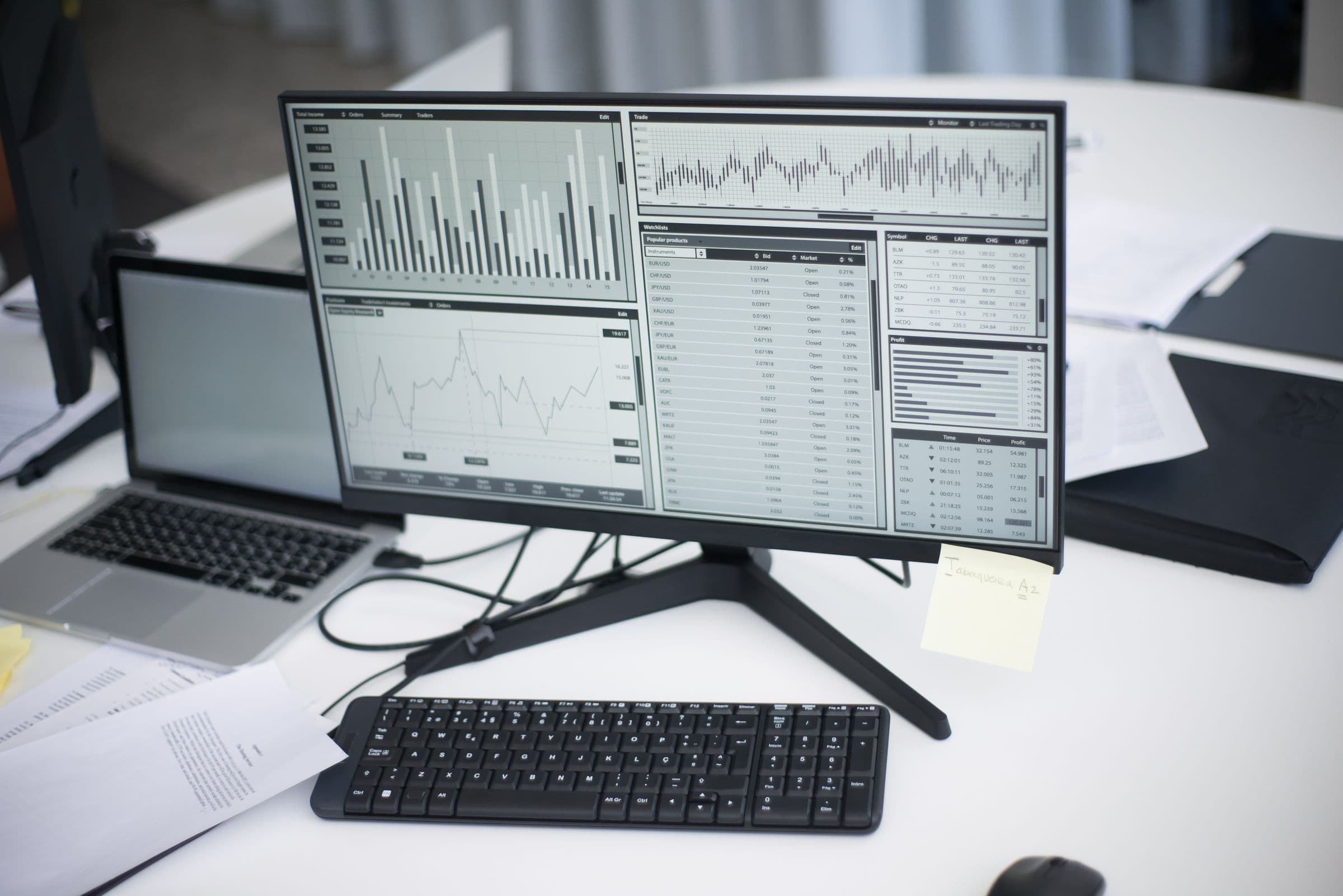
- Planners export data to spreadsheets to estimate demand, because the planning system has no forecasting and cannot be replaced this year.
- Engineering approach
- A forecasting service trains on historical transactions, publishes predictions with explanatory drivers, and surfaces them back in the existing planning screens via the integration layer.
Low-Risk Integration, One Capability at a Time.
- 1
System & data assessment
We study the legacy application's data model, interfaces and constraints, and identify where AI can add value without destabilizing production.
- 2
Integration design
We choose the least invasive connection — API facade, event capture, database view or file pipeline — and define confidence thresholds and exception paths.
- 3
Model development & validation
Models are built or adapted using your real documents, images or history, and validated against labeled samples before they touch live workflows.
- 4
Parallel run
AI results run alongside the existing process so accuracy and edge cases can be reviewed before automation is switched on.
- 5
Go-live & monitoring
We deploy to your chosen infrastructure with drift monitoring, accuracy dashboards and a feedback loop from reviewers into retraining.
Relevant technology
- AI & ML
- OCRComputer visionPredictive analyticsLLMs for extraction
- Integration
- PythonFastAPIPHPLaravelNode.js
- Data
- MySQLPostgreSQLRedisClickHouse
- Deployment
- DockerLinuxEdge devicesPrivate & hybrid cloud
Frequently asked
Do we need to replace our legacy system to use AI?
No. In most cases the existing application stays authoritative and unchanged. We connect AI services through APIs, event capture, database views or file pipelines, and write validated results back through the same controlled interfaces.
What if our system has no API?
That is common. We can build an API facade over the database, capture changes as events, integrate through import files, or — as a last resort — automate the existing interface. We choose the option with the least operational risk.
How do you handle documents or images the model is unsure about?
Every result carries a confidence score. Above a threshold you agree, data flows straight through; below it, the item goes to a review queue showing the original and the extracted values. Reviewer corrections are captured to improve the model over time.
Can the AI run without sending data to a public cloud?
Yes. We deploy self-hosted models on your servers or private cloud, or use a hybrid design where sensitive data stays internal and only non-sensitive workloads use external services. The choice is driven by your data governance, latency and cost requirements.
Does this create a path to modernize the system later?
Often, yes. The adapters and APIs we build become clean interfaces around legacy modules. Over time, individual modules can be replaced behind those interfaces without a big-bang migration — if and when that makes business sense.
Continue exploring
Start a conversation
Keep the System That Works. Add the Intelligence It's Missing.
Tell us which system your teams work around today. We'll identify where AI can be integrated safely and what the first capability should be.